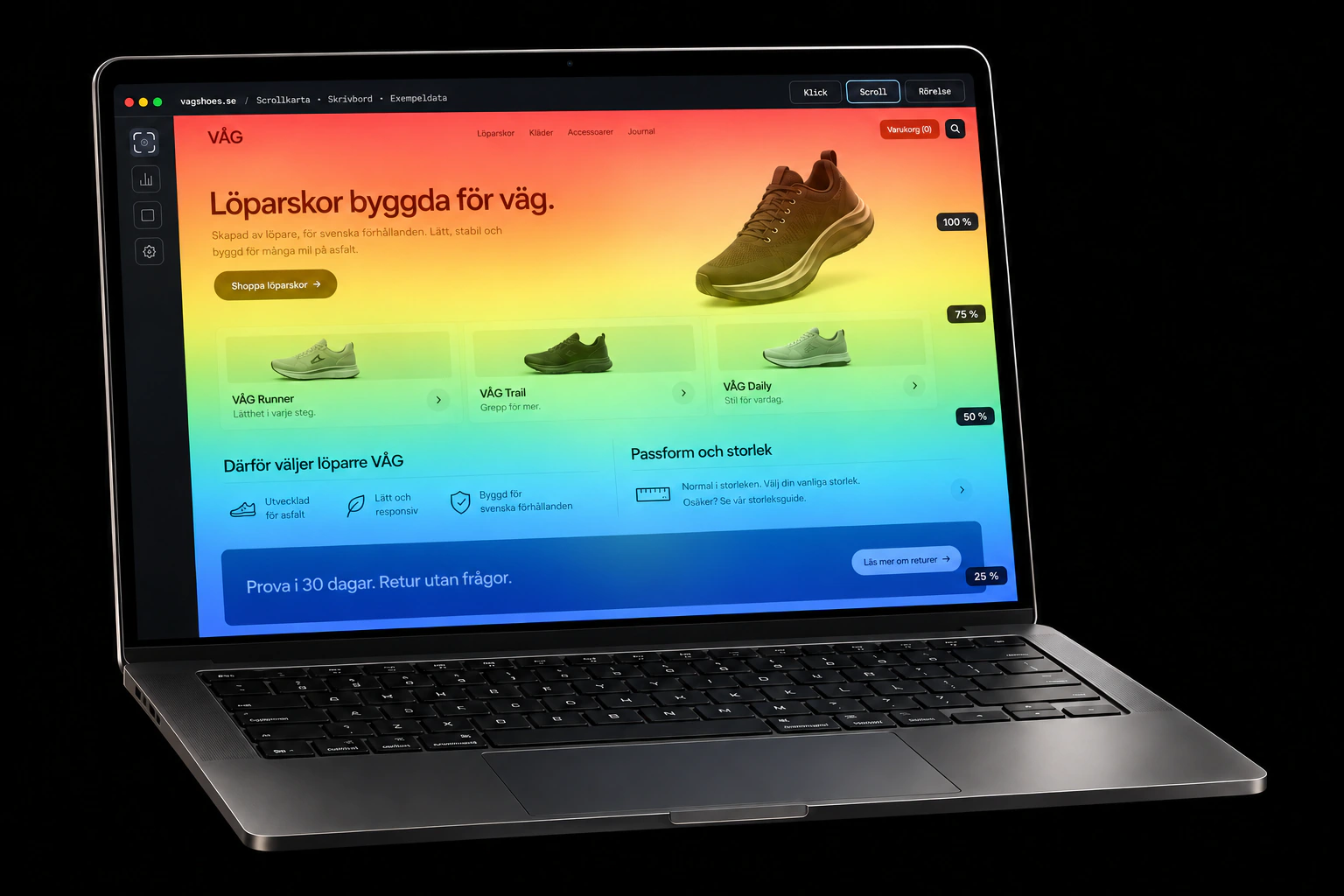
Conversion rate optimisation with a clear next step
SOVRA Digital uses conversion rate optimisation, or CRO, to investigate and reduce barriers between a relevant visit and an enquiry or purchase. The work begins with a defined action and available data. Analysis, implementation and follow-up are scoped in the quotation.
Find what makes the decision harder
SOVRA Digital reviews what visitors need to understand before making contact: the offer, scope, pricing terms, evidence and next step. Unclear copy or a broken form cannot be fixed simply by changing a button colour.
The analysis uses the evidence available. SOVRA Digital prioritises concrete problems and usability when traffic is limited. Statistically reliable effects require sufficient data.
What does web analytics show before CRO work begins?
Web analytics shows how visitors use the website and where journeys break down before an enquiry or purchase. SOVRA Digital reviews available visit and event data, the measurement period and whether important actions are recorded correctly.
The deliverable distinguishes measured behaviour from hypotheses and identifies questions that need further investigation. Missing events or insufficient data limit the conclusions. New measurement setups and ongoing reporting are agreed separately.
From a problem to a controlled change
- Define the action the page should support.
- Check that the event is measured when the action actually succeeds.
- Document the barrier and proposed improvement.
- Update the content or interaction within the approved approach.
- Check the functionality and track the result using relevant measures.
Illustrative example: A form only displays an error after the visitor tries to submit it. The hypothesis is that unclear field requirements cause unnecessary drop-offs. One possible change is to explain the requirements beside the field and provide a clear error message. Checks need to show that valid details can be submitted and that a conversion is recorded only after successful submission. Any effect on completed enquiries is assessed using comparable periods or a suitable test; this example is not a client result.
A/B testing is a choice of method
An A/B test is appropriate when you can measure a meaningful outcome and collect enough observations. With few enquiries, a test may otherwise run for a long time without distinguishing a real change from chance.
Other evidence may come from task-based tests, customer conversations and reviews of form errors.
Conversion work in an e-commerce engagement
SOVRA Digital’s partner engagement for GENTCREATE includes CRO and UX alongside SEO. See the scope of work in the GENTCREATE case study. The reported search traffic is not a measure of a change in conversion rate.

How CRO fits into SOVRA Digital’s work
SOVRA Digital works on conversion on new pages delivered within the agreed SEO engagement. A new website project includes a foundation for conversion within the agreed deliverable.
A separate CRO engagement is scoped and quoted individually. Analysis, prioritised changes, implementation and follow-up need to be specified. Describe the enquiry or purchase journey you want to improve.

Direct contact with the founder · Senior SEO strategist
Book a strategy call
Free to start · no commitment before an agreement · reply within one working day.